Reconciling Faith and Reason: Christianity and Science

padrirestaurant.net – The relationship between Christianity and science has been a subject of debate and discussion for centuries. While some view faith and reason as inherently conflicting, many others argue that Christianity and science are not only compatible but also complementary. This article explores the ways in which Christianity and science can be reconciled, highlighting historical examples, philosophical arguments, and practical applications of this reconciliation.

Historical Perspectives

Throughout history, Christianity has had a complex relationship with science. Early Christian thinkers like Augustine of Hippo laid the groundwork for a harmonious relationship between faith and reason. During the Middle Ages, the Catholic Church played a significant role in the preservation and advancement of scientific knowledge. The Renaissance and the Scientific Revolution saw a flourishing of both Christian theology and scientific discovery, with many prominent scientists being devout Christians.

Philosophical Foundations

The philosophical foundations of Christianity and science share common ground. Both disciplines seek to understand the nature of reality and the universe. Christianity provides a framework for understanding the purpose and meaning of the universe, while science offers a method for investigating its workings. The principle of methodological naturalism, which is central to the scientific method, does not inherently conflict with Christian beliefs about the supernatural. Instead, it provides a way to study the natural world without presupposing the absence of God.

Theological Perspectives

Many Christian theologians and scientists have argued that the Bible does not intend to be a scientific textbook. Instead, it provides spiritual and moral guidance. This perspective allows for a reading of scripture that is sensitive to its historical and cultural context, while also recognizing the value of scientific inquiry. The doctrine of creation, for example, can be seen as compatible with the Big Bang theory and the theory of evolution, as both affirm the existence of a Creator who brought the universe into being.

Practical Applications

The reconciliation of Christianity and science has practical implications for various fields. In medicine, Christian principles of compassion and care for the sick can guide ethical decision-making. In environmental science, the Christian stewardship of creation can motivate conservation efforts. In technology, the Christian emphasis on human dignity can inform the ethical use of new technologies.

Conclusion

Reconciling Christianity and science is not only possible but also beneficial. By embracing both faith and reason, Christians can engage with the world in a way that is both intellectually rigorous and spiritually enriching. The dialogue between Christianity and science continues to evolve, offering new insights and challenges. As Christians and scientists work together, they can contribute to a deeper understanding of the universe and our place within it, ultimately pointing to the glory of the Creator.
Sherlock Holmes and the Evolution of Forensic Science

padrirestaurant.net – In the late 19th century, Sir Arthur Conan Doyle introduced the world to Sherlock Holmes, a character who would become synonymous with the art of detection. Holmes, with his keen powers of observation, deductive reasoning, and scientific approach to solving crimes, not only captivated readers but also had a profound impact on the field of forensic science. This article explores the fascinating relationship between Sherlock Holmes and the evolution of forensic science, highlighting how a fictional detective influenced the very real world of crime investigation.

The Birth of a Detective:
Sherlock Holmes first appeared in print in 1887, in the novel “A Study in Scarlet.” Holmes was a departure from the traditional detective of his time, relying not on intuition or luck but on meticulous observation and the application of scientific methods. His use of fingerprinting, blood analysis, and trace evidence was revolutionary, even if some of his techniques were ahead of their time or purely fictional.

Forensic Science in the Victorian Era:
The Victorian era was a period of rapid scientific advancement, and Holmes’s methods were not entirely without precedent. The development of forensic science was underway, with significant contributions from figures such as Alphonse Bertillon, who developed the system of bertillonage for identifying criminals, and Francis Galton, who laid the groundwork for modern fingerprinting. Holmes’s methods, while fictional, were inspired by these real-world advancements and helped to popularize the idea that science could be used to solve crimes.

The Holmes Effect:
The popularity of Sherlock Holmes stories had a significant impact on the public’s perception of crime detection. The character’s reliance on scientific methods and the portrayal of his successes in solving seemingly unsolvable cases led to increased interest in forensic science. This, in turn, encouraged the development of forensic techniques and the establishment of forensic laboratories.

From Fiction to Fact:
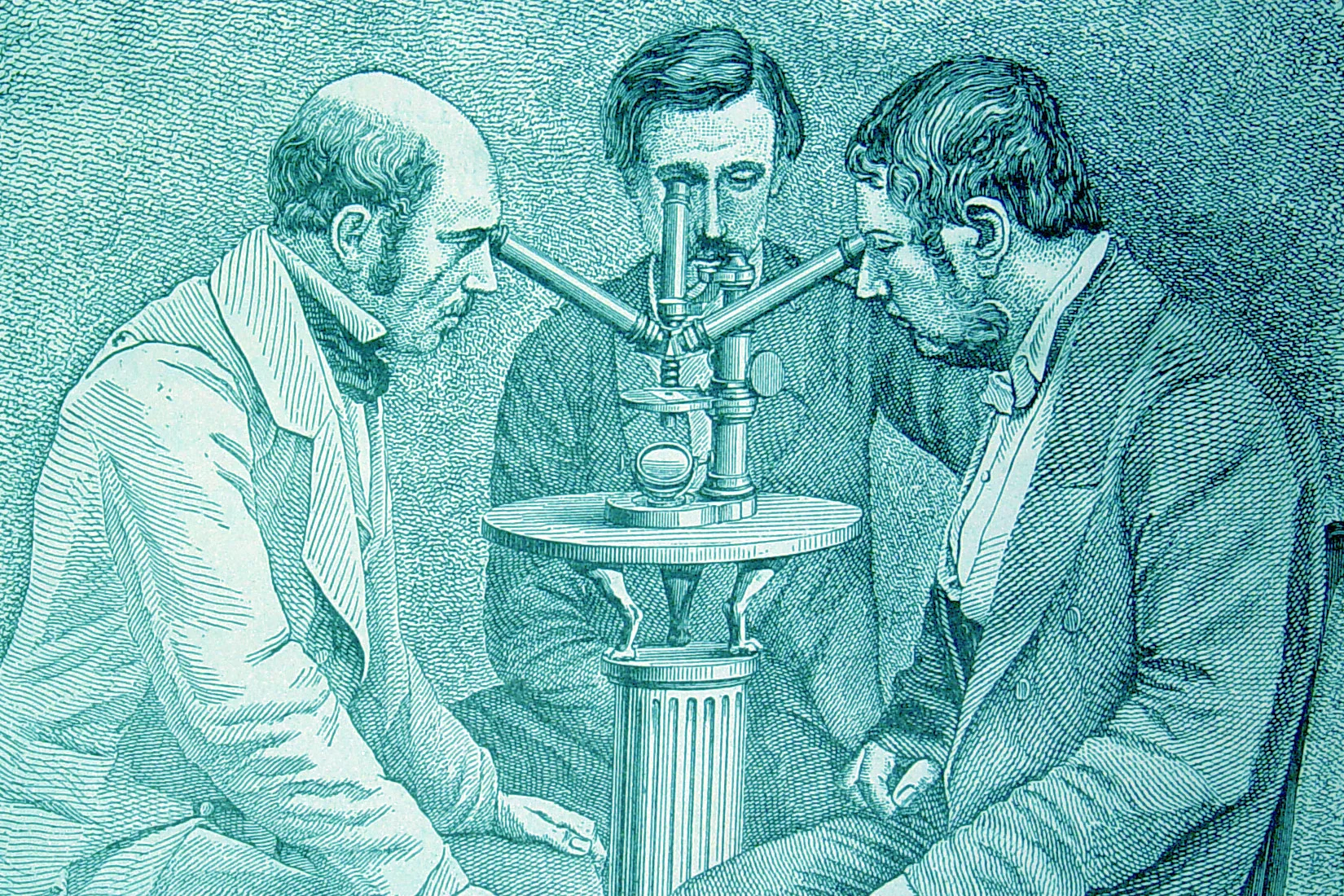
Many of the techniques Holmes used eventually became standard practice in forensic science. For example, Holmes’s use of trace evidence, such as footprints and fibers, inspired the development of forensic disciplines like soil analysis and microscopy. Similarly, his deductive reasoning and attention to detail laid the groundwork for the systematic approach to crime scene investigation that is used today.

The Legacy of Sherlock Holmes:
Today, forensic science is an integral part of law enforcement and the judicial system. The evolution of forensic science owes a debt to Sherlock Holmes, whose methods and approach to detection have been emulated and refined over the years. From DNA analysis to digital forensics, the field continues to evolve, driven by the same spirit of inquiry and innovation that Holmes embodied.

Conclusion:
Sherlock Holmes may have been a fictional character, but his influence on the evolution of forensic science is undeniable. By popularizing the scientific method in crime detection, Holmes inspired generations of forensic scientists and detectives. The art of detection has come a long way since Holmes’s time, but the principles he championed—observation, deduction, and a relentless pursuit of the truth—remain at the heart of forensic science. As the field continues to advance, the legacy of Sherlock Holmes serves as a reminder of the power of science and reason in the pursuit of justice.